

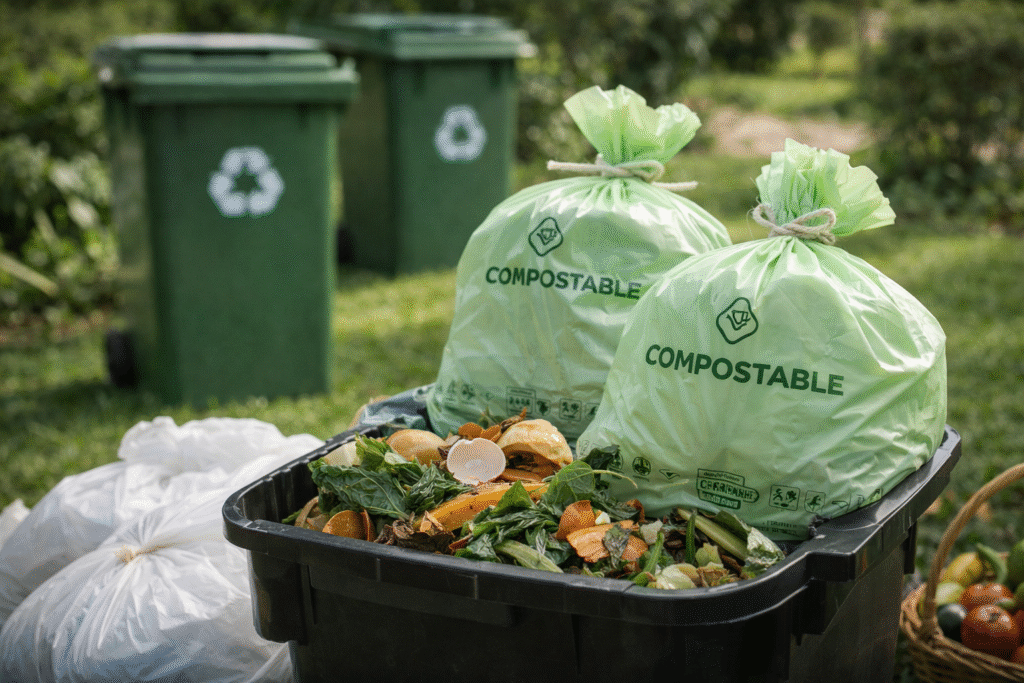
Plastic pollution has become one of the most pressing environmental challenges of modern living. From packaging to disposable household items, single-use plastics accumulate rapidly, often ending up in landfills or oceans. Among these everyday items, waste disposal bags contribute significantly to the problem. Switching to compostable bin liners offers a practical and impactful step toward reducing plastic dependence while supporting sustainable waste management practices.
Traditional plastic waste bags are typically derived from fossil fuels and can take hundreds of years to decompose. In contrast, compostable alternatives are designed to break down under controlled composting conditions, returning to the earth without leaving harmful residues. This simple shift in household habits can collectively make a measurable environmental difference.
Understanding Compostable Materials
Compostable waste bags are produced using plant-based materials such as cornstarch, biodegradable polymers, and renewable resources. These materials are engineered to decompose into natural elements—carbon dioxide, water, and biomass—within industrial or home composting systems.
Key characteristics include:
• Derived from renewable raw materials
• Certified compostable under recognised standards
• Free from toxic additives
• Designed to break down without microplastic residue
• Compatible with organic waste collection systems
By aligning with composting processes, these products support circular waste management models.
Reducing Landfill Burden
Landfills are overwhelmed with plastic waste that persists for centuries. Non-degradable disposal bags often contaminate organic waste streams, making composting difficult or impossible.
Compostable alternatives contribute to:
• Cleaner separation of food waste
• Reduced plastic contamination in compost facilities
• Lower greenhouse gas emissions from decomposing waste
• Improved soil enrichment through composting
• Decreased long-term landfill accumulation
These environmental benefits reinforce the value of biodegradable disposal solutions in everyday living.
Supporting Household Sustainability
Sustainable living is built on small, consistent actions. Choosing environmentally responsible waste bags is a practical way to align daily routines with ecological responsibility.
Household benefits include:
• Simplified composting practices
• Reduced plastic storage needs
• Cleaner kitchen waste management
• Contribution to community recycling efforts
• Alignment with zero-waste goals
When adopted widely, these changes create cumulative positive impact.
Durability Without Environmental Compromise
A common misconception is that biodegradable waste bags lack strength. Modern compostable designs are engineered for durability while maintaining eco-friendly properties.
Performance features often include:
• Leak-resistant construction
• High tear strength
• Compatibility with standard waste bins
• Reliable performance during disposal
• Moisture resistance suitable for food scraps
These attributes ensure practicality without sacrificing sustainability.
Meeting Diverse Waste Management Needs
Waste disposal requirements vary across residential, commercial, and municipal settings. Larger properties and facilities often require heavy-duty capacity options such as 240l bin liners for bulk waste collection.
Compostable solutions are now available in various sizes, enabling:
• Use in community waste collection
• Commercial kitchen disposal
• Hospitality industry waste management
• Event and festival sustainability initiatives
• Municipal organic waste programmes
This scalability enhances adoption across different sectors.
Encouraging Responsible Consumer Behaviour
Environmental awareness continues to grow as consumers recognise the consequences of plastic pollution. Selecting biodegradable disposal bags reflects a broader commitment to responsible consumption.
Benefits for environmentally conscious households include:
• Reduced carbon footprint
• Support for renewable material industries
• Decreased reliance on petroleum-based products
• Contribution to sustainable supply chains
• Positive influence on community practices
Collective consumer action can accelerate the transition toward sustainable materials.
Compatibility with Waste Segregation Systems
Effective waste segregation relies on clear differentiation between recyclable, organic, and general waste. Compostable disposal solutions integrate seamlessly into organic waste streams.
Compared to conventional rubbish bin liners, biodegradable alternatives support:
• Improved composting efficiency
• Reduced contamination of organic waste
• Easier sorting at waste facilities
• Enhanced compliance with local regulations
• Cleaner overall waste handling processes
Such integration strengthens municipal sustainability efforts.
Long-Term Environmental Impact
While individual households may perceive their contribution as small, widespread adoption significantly reduces plastic accumulation. Compostable materials break down naturally, preventing long-term environmental persistence.
Long-term advantages include:
• Lower microplastic pollution levels
• Improved soil quality through compost return
• Reduced ocean plastic leakage
• Enhanced ecosystem protection
• Support for climate-conscious living
These outcomes align with global environmental sustainability objectives.
Practical Steps for Transition
Transitioning to compostable alternatives is straightforward. Households can begin by replacing conventional disposal bags with certified biodegradable options and ensuring proper composting practices.
Implementation strategies include:
• Checking compostability certifications
• Following local compost collection guidelines
• Storing waste bags in dry conditions
• Educating family members about proper disposal
• Supporting eco-conscious suppliers
Gradual changes foster long-term sustainable habits.
Conclusion
Reducing plastic waste begins with everyday choices. By replacing conventional disposal bags with recycled bin liners and compostable alternatives, households contribute to cleaner landfills and healthier ecosystems. Sustainable waste management requires collective commitment and accessible solutions. Through environmentally responsible product offerings, Shine Suppliers supports the transition toward practical, eco-friendly waste disposal practices that align with modern sustainability goals.