

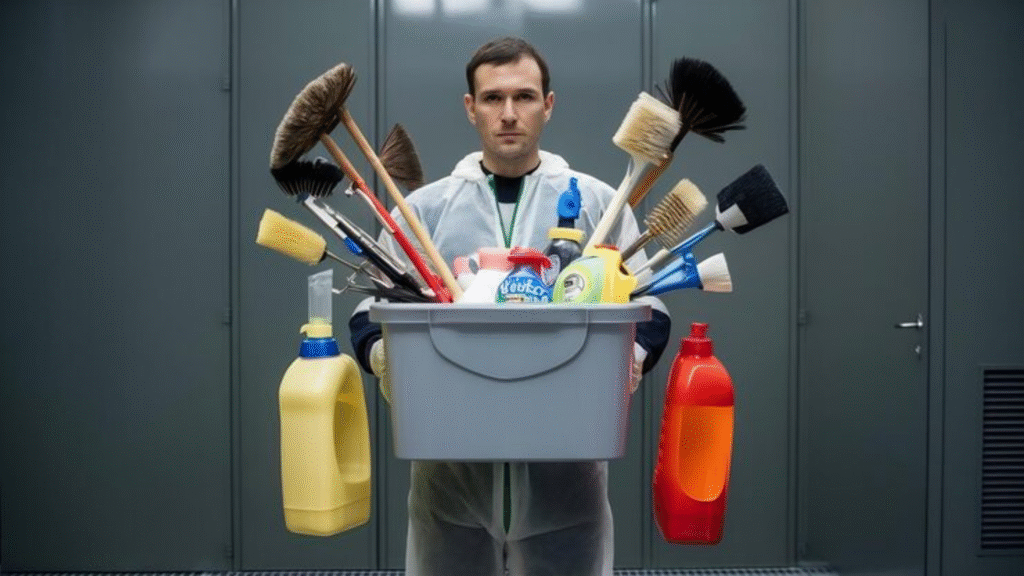
Cleanliness in modern environments is no longer judged solely by appearance. It is measured by consistency, safety, speed and sustainability. Across workplaces, hospitality settings, healthcare facilities and residential complexes, daily upkeep must be precise and repeatable. In this landscape, professional cleaning products play a decisive role by supporting structured workflows, reducing effort and improving outcomes without compromising standards.
Rather than relying on improvised tools, organisations increasingly turn to purpose-designed solutions that integrate seamlessly into daily operations. These products are not about excess; they are about efficiency—doing the same task better, faster and with greater reliability.
Why Cleaning Operations Demand a Professional Approach
Daily cleaning involves more than surface-level maintenance. It requires coordination, timing and tools that perform consistently under repeated use. In high-traffic environments, even minor inefficiencies multiply quickly.
Professional-grade supplies are engineered to meet these demands. Their design reflects real-world usage patterns, ensuring durability and performance across varied conditions.
Efficiency Begins With the Right Tools
Efficiency is often misunderstood as speed alone. In cleaning operations, it is defined by reduced rework, minimal waste and predictable results. Tools that fail mid-task or require frequent replacement disrupt workflows and increase costs.
Purpose-built supplies streamline routines by aligning function with task requirements. This alignment reduces physical strain and supports uniform standards across teams.
Supporting Hygiene and Safety Standards
How Professional Supplies Strengthen Daily Protocols
- Consistent performance across repeated use
- Reduced risk of cross-contamination
- Compatibility with established cleaning routines
- Lower material wastage
- Improved staff productivity
- Easier compliance with hygiene guidelines
Waste Management as an Operational Priority
Effective waste handling is integral to cleanliness. Disposal processes must be hygienic, reliable and efficient to prevent secondary contamination or odour issues.
In many facilities, rubbish bin liners are not an afterthought but a critical component of daily operations. Their quality affects not only cleanliness but also handling safety and waste segregation accuracy.
Durability and Load Management
Liners used in professional settings must withstand variable loads without tearing or leaking. Failures during removal can lead to spills, re-cleaning and increased exposure risks.
Well-designed waste liners support secure handling, enabling smooth transitions between collection and disposal points without disruption.
Sustainability in Modern Cleaning Operations
Sustainability has become an operational expectation rather than a niche concern. Cleaning routines generate significant waste, making material choices increasingly important.
The use of recycled bin liners reflects a shift toward responsible sourcing without compromising performance. These options support waste reduction goals while maintaining functional reliability.
Balancing Performance With Environmental Responsibility
Sustainable products must still meet operational demands. Advances in material processing now allow recycled options to perform comparably to traditional alternatives.
This balance enables organisations to align environmental commitments with daily efficiency rather than treating them as competing priorities.
The Role of Ergonomics in Cleaning Productivity
Cleaning tasks are physically repetitive. Poorly designed tools increase fatigue and reduce consistency over time. Ergonomic considerations—handle design, weight distribution and grip—directly influence staff efficiency.
Professional supplies are developed with these factors in mind, supporting prolonged use without unnecessary strain.
Standardisation Across Teams and Sites
Consistency is easier to achieve when teams use the same tools and supplies. Standardisation reduces training complexity and ensures uniform outcomes across locations.
Professional-grade products support this consistency, allowing organisations to replicate successful routines without variation.
Reducing Long-Term Operational Costs
While initial costs may differ, professional supplies often reduce long-term expenditure through durability and efficiency. Fewer replacements, reduced wastage and lower rework rates contribute to overall savings.
Cost-effectiveness, in this context, is measured over time rather than per unit.
Enhancing Workflow Predictability
Predictable tools create predictable outcomes. When supplies perform reliably, schedules remain intact and quality benchmarks are met consistently.
This predictability is especially valuable in environments with strict turnaround times or regulatory oversight.
Supporting Multi-Surface Cleaning Needs
Modern spaces include diverse surfaces, each requiring appropriate tools. Professional supplies are designed to adapt across these variations without compromising effectiveness.
Versatile tools reduce the need for excessive inventory while maintaining task-specific performance.
Training and Ease of Use
Ease of use is a critical but often overlooked factor. Supplies that are intuitive reduce onboarding time and minimise errors during use.
Professional products are typically designed with straightforward application in mind, supporting faster adoption across teams.
Quality as a Reflection of Professional Standards
The quality of cleaning supplies often reflects the standards of the organisation itself. Reliable tools support consistent presentation, which influences perception among occupants, clients and visitors.
Cleanliness achieved through structured processes conveys professionalism and care.
Integrating Products Into Daily Routines
The most effective supplies integrate seamlessly into existing workflows. They do not require significant behavioural change or additional steps.
This integration ensures that improvements in efficiency feel natural rather than forced.
The Importance of Maintenance Tools
Beyond waste handling and surface care, maintenance tools play a vital role in daily operations. Simple, durable implements support quick touch-ups and routine upkeep.
A well-designed floor cleaning brush, for example, contributes to surface longevity by enabling effective debris removal without damaging finishes.
Adaptability Across Sectors
Professional cleaning supplies serve diverse environments—from offices and retail spaces to healthcare and hospitality. Their adaptability supports consistent results regardless of context.
This versatility reinforces their role as foundational tools rather than specialised accessories.
Continuous Improvement Through Better Tools
Operational efficiency improves incrementally. Small enhancements in tools and supplies can yield significant gains when applied daily.
Professional-grade products support this continuous improvement mindset by addressing inefficiencies at their source.
Final Thoughts
Daily cleaning operations depend on reliability, efficiency and thoughtful design. Professional supplies support these priorities by streamlining workflows, improving safety and aligning with sustainability goals. When tools perform consistently, teams work confidently and standards remain intact. From waste handling solutions to essential maintenance implements like a floor cleaning brush, the right products form the backbone of effective routines. At Shine Suppliers, this understanding reflects a commitment to practical, dependable solutions that support efficiency without excess—ensuring cleanliness remains a structured process rather than a daily challenge.