

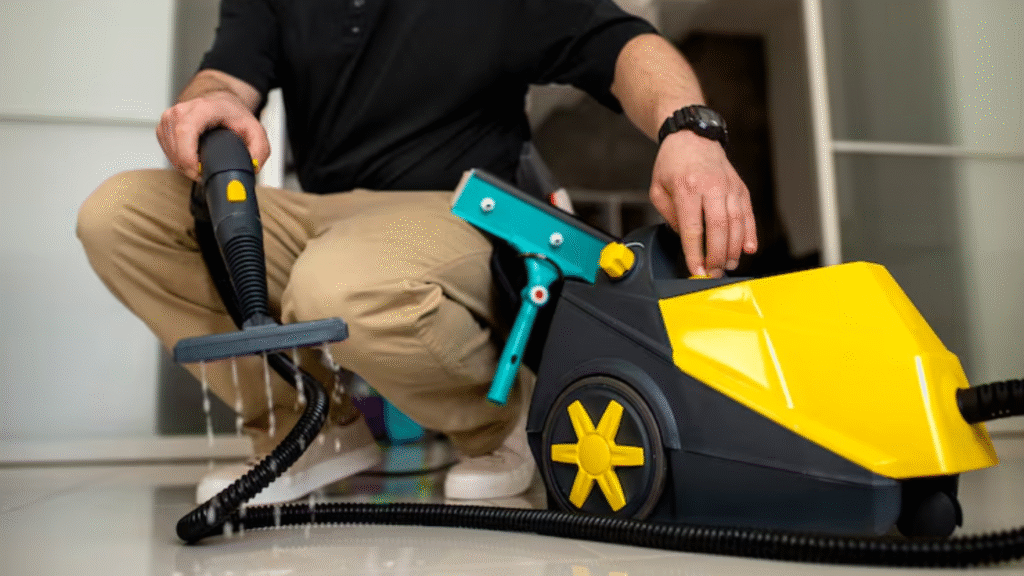
Modern spaces are defined not only by how they look but by how efficiently they function. Offices, retail environments, healthcare facilities, educational institutions, and residential complexes all share a common requirement: clean, well-maintained surfaces that support hygiene, safety, and visual consistency. In this context, the role of a floor cleaning machine has shifted from being a convenience to a necessity, responding to the demands of larger spaces, higher foot traffic, and stricter cleanliness expectations.
Manual methods, while familiar, often fall short when consistency, speed, and deep sanitation are required across expansive areas. Machine-assisted solutions address these gaps with precision and reliability.
Evolving Expectations of Cleanliness
Cleanliness standards have evolved significantly over time. Modern environments are expected to remain presentable throughout the day, not just after routine cleaning cycles.
High-traffic zones accumulate dust, debris, and residues quickly. Floor cleaning machines provide the capacity to maintain these areas regularly without disrupting daily operations, ensuring surfaces remain consistently hygienic and visually uniform.
Efficiency in Time and Labor
Manual cleaning is labor-intensive and time-consuming, especially in large or frequently used spaces. Fatigue and inconsistency can compromise results over extended periods.
Machines streamline the process by covering more area in less time, reducing physical strain on cleaning staff while delivering repeatable outcomes. This efficiency allows teams to focus on quality rather than sheer effort.
Consistency Across Different Surfaces
Modern buildings often feature a mix of materials, including tiles, stone, vinyl, and polished concrete. Each surface responds differently to wear and contaminants.
Floor cleaning machines are designed to adapt to these variations, applying controlled pressure and cleaning action that suits specific materials without causing damage or uneven wear.
Supporting Hygiene in Shared Environments
In shared spaces, floors are a primary contact surface for footwear, equipment, and sometimes direct human contact. This makes them critical points for hygiene management.
Machine-assisted cleaning removes embedded dirt and residues that manual methods may leave behind, contributing to healthier indoor environments.
Enhancing Safety Through Better Maintenance
Slips and falls are common risks in poorly maintained spaces. Accumulated grime or moisture increases this risk significantly.
Consistent machine cleaning improves traction by removing slippery residues, helping maintain safer walking surfaces across commercial and public environments.
Adapting to Modern Building Sizes
As buildings grow larger and layouts become more complex, cleaning methods must scale accordingly. What works in a small room may not be practical in a large facility.
The use of a floor cleaner machine allows maintenance teams to manage expansive areas efficiently, ensuring that cleanliness standards remain consistent regardless of space size.
Reducing Long-Term Surface Wear
Dirt particles act as abrasives, gradually wearing down floor finishes. Over time, this leads to dullness, scratches, and premature surface degradation.
Regular machine cleaning removes these particles before they cause lasting damage, extending the lifespan of flooring materials and preserving their appearance.
Precision in Tile and Grout Maintenance
Tiles and grout lines are particularly prone to trapping dirt. Manual cleaning often struggles to reach these embedded areas effectively.
A tile floor cleaner machine applies targeted action that lifts debris from textured surfaces and grout lines, restoring cleanliness without excessive scrubbing.
Supporting Professional Presentation
Clean floors contribute significantly to how a space is perceived. Whether in retail, hospitality, or corporate settings, floor condition influences overall impression.
Machine cleaning supports a polished, professional appearance that aligns with modern design and branding expectations.
Environmental and Resource Considerations
Modern cleaning machines are designed to use water and cleaning agents more efficiently than traditional methods. Controlled dispensing reduces waste while maintaining effectiveness.
This efficiency supports sustainability goals without compromising hygiene standards.
Integration With Routine Maintenance Plans
Floor cleaning machines fit seamlessly into scheduled maintenance routines. Their predictable performance allows for planned cleaning cycles rather than reactive responses to visible dirt.
This structured approach simplifies facility management and improves long-term cleanliness outcomes.
Versatility Across Sectors
From healthcare and education to retail and residential complexes, the need for effective floor maintenance spans multiple sectors.
Machines adapt easily to different operational contexts, making them a practical investment across varied environments.
Why Floor Cleaning Machines Matter Today
- Improve efficiency and consistency
- Support hygiene in shared spaces
- Reduce long-term surface damage
- Enhance safety and appearance
- Adapt to modern building demands
Conclusion
Floor cleaning machines have become essential tools in maintaining the hygiene, safety, and visual quality of modern spaces. Their ability to deliver consistent results across diverse surfaces makes them a practical response to evolving cleanliness expectations. When paired with the right floor cleaning product, these machines support long-term maintenance strategies that balance efficiency with care—an approach aligned with the practical solutions offered by Shine Suppliers.